
When shopping for outdoor shooting gear, buyers often face a mix of critical technical specifications and marketing fluff. Load-bearing terms are those that dictate how much weight a bag can carry, how securely a pouch holds a magazine, or whether a rail system will accept a specific optic. These are the numbers and standards you must verify. Marketing vocabulary, such as “tactical-ready,” “ruggedized,” or “pro-grade,” provides no measurable data and should be ignored in favor of material types and weight ratings. To find the best value, focus on the physical dimensions and material standards listed in the technical specs.
Outdoor Shooting Gear Materials and Durability
- Denier (D) – This measures the linear mass density of fibers in synthetic fabrics like nylon. A higher denier number indicates thicker, more durable fibers, which is generally better for high-wear areas like the bottom of a range bag or the base of a backpack.
- Cordura – This is a specific brand of high-strength fabric known for abrasion resistance. While not a measurement, it serves as a benchmark for durability in gear designed to withstand friction and heavy use.
- Ripstop – This refers to a weaving pattern that prevents tears from spreading. It is a structural feature of the fabric rather than a weight measurement, and it is a standard requirement for gear that may be subjected to snagging.
- MOLLE/PALS – This is the universal standard for modular attachment using rows of heavy-duty webbing. It allows you to attach pouches and accessories to vests or packs; look for the standard “PALS” grid to ensure compatibility with most modular accessories.
- Water Resistance vs. Waterproofing – Water-resistant gear can shed light rain or splashes, while waterproof gear (often rated by an IP standard) prevents water ingress. For outdoor shooting, water-resistant is usually sufficient for gear bags, but waterproof is preferred for electronics or sensitive components.
- Weight Capacity (lbs/kg) – This is the maximum weight a bag or carrier is designed to hold safely. Always check this against your expected load, including ammunition and heavy optics, to prevent material fatigue or strap failure.
Where these choices show up in our reviews
These 3 have their own full review on this site, and run from $25.99 to $82.39.
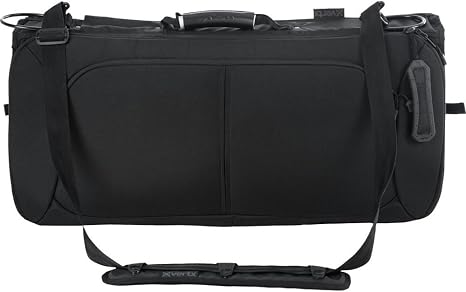
Vertx Professional Rifle Garment Bag
$82.39 price checked August 2026
Read our full Vertx Rifle Bag review
Budget-conscious owners can find affordable leather holsters for px4 series to keep costs low.


FOX OUTDOOR PRODUCTS MACH-1 Tactical Vest
If you are a southpaw, see the best left hand holsters for 92 series options.
$61.49 price checked August 2026
Outdoor Shooting Gear Compatibility and Mounting
- QD (Quick Detach) – This is the standard interface for rapidly attaching and removing accessories like sights or lights. Compatibility depends on the specific QD lever style, so ensure the mount matches the specific rail or rail-system you own.
- Picatinny Rail (MIL-STD-1913) – This is the standard rail system for mounting optics and accessories. It features a specific width and slot spacing; ensure your accessories are compatible with the 1913 standard to guarantee a secure fit.
- Arca-Swiss – This is a common standard for tripod and camera accessories, but it is increasingly used in high-end shooting setups for stable mounting. It uses a specific sliding and locking mechanism different from standard Picatinny rails.
- Thread Pitch (UNC/Metric) – This defines the diameter and “thread count” of a screw. If you are mounting a suppressor or a bipod, the thread pitch must match the barrel or rail exactly; a mismatch makes the part impossible to install.
- Compatibility Limits – This refers to the maximum weight or size an accessory can be while still being supported by a specific mount or rail. If an optic exceeds the weight limit of a rail system, it may cause the mount to fail under recoil.
Outdoor Shooting Gear Storage and Organization
- Internal Dividers – These are removable panels used to create separate compartments. More dividers allow for better organization of small items like cleaning kits or spare parts, but they can reduce the total open space for larger items.
- Load Distribution – This refers to how a bag’s design shifts weight toward the hips or shoulders. Better load distribution is indicated by padded straps and a sternum strap, which reduces strain during transport.
- Quick-Access Compartments – These are exterior pockets or zippers designed for items you need frequently. Look for these on the top or sides of range bags to avoid digging through the main compartment for common tools.
- Reinforced Bottom – This refers to extra layers of material or plastic on the base of a bag. A reinforced bottom is essential for range gear to prevent the fabric from tearing when placed on rough ground or concrete.
Commonly Confused Shooting Gear Terms
Several terms in outdoor shooting gear overlap in meaning but differ in application. Understanding these differences helps you avoid buying gear that does not fit your specific needs.
MOLLE vs. PALS
MOLLE (Modular Lightweight Load-carrying Equipment) is the system as a whole, while PALS (Pouch Attachment Ladder System) is the specific webbing layout. When you see “MOLLE compatible,” it means the gear uses the PALS grid of webbing to allow for modular attachments.
For a broader overview, learn about the different types of outdoor shooting gears available today.
Waterproof vs. Water-Resistant
Waterproof gear is designed to keep contents dry even when fully submerged or under heavy pressure, often involving sealed seams. Water-resistant gear can repel light rain or moisture for a period of time but will eventually soak through if exposed to heavy moisture or prolonged rain.
Picatinny vs. Weaver Rails
While they look similar, Picatinny rails (MIL-STD-1913) have a wider surface area and different slot spacing than Weaver rails. A Picatinny mount will usually fit on a Weaver rail, but a Weaver mount may not sit securely or correctly on a Picatinny rail.
Denier vs. Weight
Denier measures the thickness of the individual fibers in a fabric, while weight refers to the total mass of the item. A high-denier fabric is more durable but may result in a heavier bag; you must balance your need for durability against your desired carrying weight.
Quick Detach (QD) vs. Fixed Mounts
Quick Detach (QD) systems allow you to remove an accessory in seconds using a lever or button. Fixed mounts are bolted directly to the rail and stay in place; they offer a more permanent installation but require tools to remove or adjust.
Browse our other Outdoor Shooting Gear pages
- Which Tactical Vests Are Best for Shooting Range Use?
- Best Archery Compound Bow Release Aids
- Rifle Garment Bags for Storage Compared
- Choosing the Best Leather Holsters for PX4 Series Under $10
- The Shooting Range Gear That Works Best for Big and Tall Shooters
- Which Left Hand Holsters Are Best for 92 Series?