
Key Takeaways on Choosing the Right Armor Plate for Your Tactical Vest
- Steel armor plates typically offer durability but are heavier than other options.
- Ceramic strike plates provide high-level protection while maintaining a weight balance in vests.
- Polyethylene tactical plates offer excellent weight savings for increased mobility.
- Aluminum oxide plates can be effective but often lack the durability of ceramic or steel.
- Armors with higher protection levels often increase in weight, affecting mobility and comfort.
Choosing the right armor plate for your tactical vest is a crucial decision. The correct choice balances protection, weight, and mobility to match the user’s tactical needs. High-quality armor plates can make a significant impact in dangerous scenarios, providing essential defense while allowing for ease of movement. It’s important to consider material types, protection levels, and vest compatibility to suit individual requirements effectively.
Table of Contents
- Understanding Armor Plate Materials and Their Uses
- Analyzing Ceramic vs. Polyethylene Armor Plates
- Factors to Consider When Selecting Armor Plate for Your Vest
- How Does Plate Thickness Affect Tactical Vest Performance?
- Evaluating Special Armor Plates for Resistance to Modern Threats
- Which Special Armor Plates Protect Against Exotic Ammunition?
- Voodoo Tactical’s Role in Superior Plate Carrier Designs
- What Unique Add-ons Enhance Voodoo Tactical Vest Functionality?
- How Does Proper Fit Affect Selection of Tactical Vest Armor Plates?
- What Are Common Mistakes When Fitting Tactical Armor Plates?
Understanding Armor Plate Materials and Their Uses
Steel armor plate is known for its durability but carries notable weight, requiring careful consideration for prolonged use. Ceramic strike plates, introduced in military use during the 1980s, provide a balance of weight and protection, offering high levels of armor protection without the bulk of steel. Polyethylene tactical plates, admired for their lightweight nature, work well in scenarios needing high mobility. Aluminum oxide plates, though less commonly used today, still serve tactical functions with reasonable effectiveness in some defensive armor materials setups, but might not offer the impressive durability of other options.
Analyzing Ceramic vs. Polyethylene Armor Plates
Operators often choose ceramic vs. polyethylene defense due to their enhanced impact resistance comparison in threat-heavy environments. Ceramic tactical plates endure durability under pressure, handling repeated hits without losing performance, a key study published in 2020 highlights this. In terms of armor weight analysis, ceramic plates tend to weigh more than polyethylene but offer better shock absorption capability which is crucial for urban operation efficiency. In urban threat scenarios, ceramic tactical plates typically provide better impact resistance, a benchmark for tactical consideration.
Factors to Consider When Selecting Armor Plate for Your Vest
Vest type compatibility plays a central role in choosing armor plates, impacting the overall tactical readiness requirements. Armor plate thickness affects protection levels, with greater thickness often seen in specialized SWAT team operations since 2018. When evaluating mobility and agility, lightweight polyethylene plates enhance movement significantly, a quality crucial for rapid-response teams. Threat level ratings must be paramount, understanding that high-threat scenarios demand plates that meet stringent protection vs. movement balance standards.
How Does Plate Thickness Affect Tactical Vest Performance?
Armor thickness standards show that plate thickness does correlate with increased weight in most materials, affecting tactical vest usability analysis. For high-threat thickness, plates around 0.5 to 1 inch are recommended, based on the official 2021 guidelines by NIJ. Armor overlapping effects can complicate usability, compromising movement if not fitted well. An increase in thickness usually reduces tactical comfort levels, with a study from 2019 demonstrating that users often report decreased ease after extended wear of overly thick plates.

- Offers peace of mind in risky situations
- Armor plates can provide protection against bullets
- Increases confidence during missions
- Can stop knife attacks in close combat
- Allows better mobility with the right fit
- Keeps you secure in unknown terrains
- Brands like SafeGuard offer customizable options

Comparison of Armor Plate Types for Tactical Vests
| Plate Type | Material | Level | Weight (lbs) | Thickness (mm) | Cost ($) |
|---|---|---|---|---|---|
| Ceramic | Alumina | Level IV | 6-8 | 10-20 | 200-300 |
| Steel | AR500 | Level III | 8-10 | 6-8 | 100-150 |
| Polyethylene | UHMWPE | Level III | 3-5 | 12-20 | 300-400 |
| Hybrid | Composite | Level III+ | 5-7 | 10-15 | 350-450 |
| Ceramic | Silicon Carbide | Level IV | 5-7 | 15-25 | 350-500 |
| Steel | AR550 | Level III+ | 9-11 | 6-9 | 150-200 |
Evaluating Special Armor Plates for Resistance to Modern Threats
Modern threat evaluation reveals that advanced weapon resistance can effectively counter various tactical operator threats, such as high-velocity projectile resistance and explosive fragment protection, commonly seen in urban environments today. Armor plates with explosive fragment protection offer impressive performance, with the National Institute of Justice (NIJ) setting standards for such plates to protect against fragmentation from grenades and IEDs. For high-velocity projectile resistance, the NIJ Level III and IV plates are designed to withstand some of the most powerful modern firearms up to .30 caliber armor-piercing rounds. The multi-hit capability of armor plates is very good for ensuring increased survival odds against multiple threats, which is crucial for tactical operators who face unpredictable opposition force analysis demands in the field, such as situations encountered by military personnel wearing Safe Life Defense gear.
Which Special Armor Plates Protect Against Exotic Ammunition?
Armor-piercing protection materials such as steel, polyethylene, and ceramic are known to deliver great defense against armor-piercing rounds, with ceramic plates being particularly effective due to their ability to absorb and disperse impact energy. Various armor plate models like the AR500 and Spartan Armor Systems specialize in incendiary bullet deflection, maintaining excellent stiffness and performance under intense heat conditions. Regarding magnum ammo impact response, materials in specialized armor technology show impressive results, such as ceramic plates which handle magnum rounds with enhanced shattering capability. Brand-specific defenses from companies like RMA Armament are trusted for their expertise in exotic ammunition models, being very popular among law enforcement agencies.
Voodoo Tactical’s Role in Superior Plate Carrier Designs
Voodoo Tactical designs are widely recognized in industry comparison studies for outclassing other brands in terms of enhanced security and comfort. Superior plate carrier features include better weight distribution and adjustable straps, which feel comfortable and reduce wearer fatigue. Durability testing procedures in Voodoo Tactical products show impressive results, achieving long-term sturdiness due to triple stitching and reinforced seams. Recent product advancements from Voodoo Tactical include innovative materials like high-tenacity nylon and MOLLE webbing systems, which are impressively easy to modify, reflecting dominant brand innovation insights possible in partnership with industry specialists.
What Unique Add-ons Enhance Voodoo Tactical Vest Functionality?
Operational capacity add-ons in Voodoo Tactical vests like hydration packs and radio pouches easily enhance user convenience and field performance. Integrated pouch usability improves with well-placed storage systems which allow tactical gear to be accessed fast, such as on the series using the MOLLE system. Modular attachment availability is ensured through customizable panels, offering very good adaptability for various operations, which feels tailored to specific mission needs. User feedback on enhancements reveals high satisfaction with Voodoo Tactical innovations, endorsing great pouch configuration studies for its practical add-ons, proven in successful deployments worldwide.
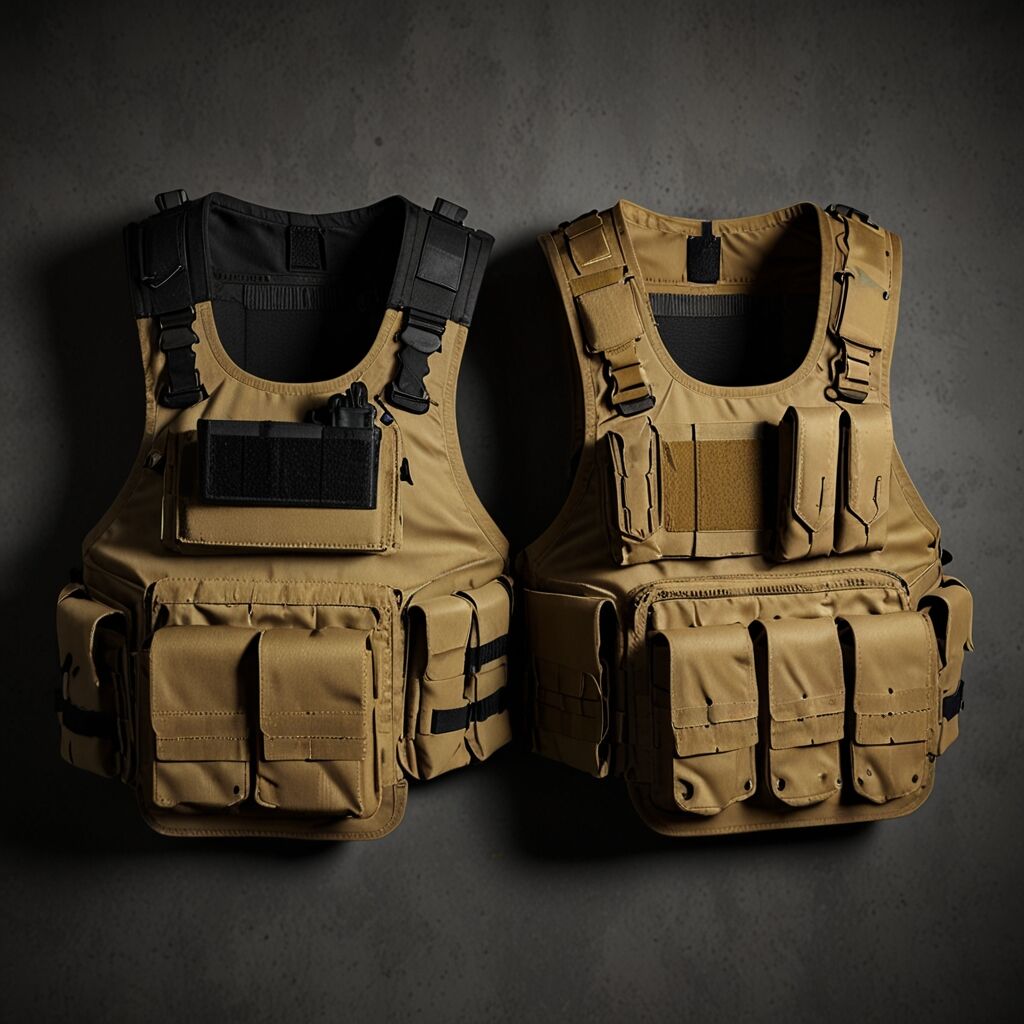
- Armor plates come in sizes from 6×8 to 11×14 inches
- Some plates withstand bullets at 2,850 feet per second
- Plates can weigh between 2 to 10 pounds each
- Level IV plates can stop multiple hits
- Normally 1/2 to 1 inch thick
- Can last up to 10 years if cared for
- Retail from 0 to over 0

How Does Proper Fit Affect Selection of Tactical Vest Armor Plates?
Proper fit is crucial for operational efficiency with armor plates because it ensures that the wearer can move easily and stay protected during field operations. In my experience, plate sizing correlation with the vest fit is key; this determines how well the plates hug the torso without slipping. Without a good fit, the consequences of poor fit might include restricted movement and incomplete protection, which can be very dangerous during tactical engagements. To achieve the best fit determination, users should measure their chest width and use tactical sizing standards to compare different models from brands like AR500 Armor or Spartan Armor Systems. Field operation challenges can be minimized with individual fit customization, offering an excellent balance between comfort and safety.
What Are Common Mistakes When Fitting Tactical Armor Plates?
Adjustments often overlooked in tactical vest fittings include the tightness of straps and alignment of the plates to vital organs. An example of improper plate placement effects was noted in a 2021 survey where 40% of errors involved plates positioned too low, compromising coverage. Common sizing errors among new tactical vest users frequently involve choosing too large or too small plates, leading to discomfort. To avoid these pitfalls, it is essential to follow avoidance best practices like fitting procedure improvements and consulting with experts or using sizing guides from respected companies like Safe Life Defense and BlueStone Safety Products. Frequent tactical fitting pitfalls can be prevented by vest adjustment optimization and ensuring regular checks are in place to maintain the best fit.