
Key Takeaways about the Role of 2-Ton Fabric in Combat Vests Explained
- 2-ton fabric provides enhanced safety and durability in combat vests.
- High-density fabrics increase ballistic performance in tactical gear.
- Hybrid fabric integration enhances weight distribution and user comfort.
- Weight distribution in vests affects mobility and efficiency in combat.
- Environmental factors influence the longevity of 2-ton fabric vests.
The role of 2-ton fabric in combat vests ensures sturdiness and longevity, making it a top choice for tactical applications. 2-ton fabric improves durability and offers excellent protection and comfort, which are important for users considering tactical vests. The fabric is designed to withstand harsh environments and provides a balance between flexibility and defense. Companies like TacticalVestPro specialize in explaining how 2-ton fabric benefits users planning to purchase tactical vests, and their insights help consumers make informed decisions about fabric selection.
Table of Contents
- Understanding the Benefits of High-Density Protective Fabrics
- The Integration of Hybrid Fabrics in Modern Vests
- The Role of 2-Ton Fabric in Combat Vest Durability
- The Impact of Weight Distribution on Vest Efficiency
- Exploring Lancer Tactical’s Fabric Innovations
- Assessing User Feedback on Lancer Tactical Vests
- How Do Modular Plate Systems Enhance Vest Adaptability?
- What Are the Key Features of Lancer Tactical’s Modular System?
- Evaluating Tactical Plate Materials and Their Effectiveness
- Why Should Users Care About Cyber-Kinetic Wearables in Vests?
Understanding the Benefits of High-Density Protective Fabrics
High-density protective fabrics significantly enhance ballistic performance by distributing impact forces across a wider area, thereby reducing penetration risks. In 2019, studies found that high-density materials can decrease injury rates by 20%. From my perspective, these fabrics are preferred over traditional combat vest materials due to their impressive protective properties and lightweight nature. The fabric density impacts tactical vest weight and flexibility by maintaining a balance; higher density often means greater protection but less flexibility. However, modern technologies, such as fiber-reinforced composites in protective fabric properties, introduce ways to enhance flexibility without compromising performance.
The Integration of Hybrid Fabrics in Modern Vests
Modern combat vests often use hybrid fabric types like Kevlar and Dyneema, known for their excellent durability. Kevlar, in particular, boasts the highest tensile strength comparison among hybrid options, capable of enduring extreme stress. Comparing single-material vs hybrid fabrics, hybrid options provide superior performance; typically, hybrid materials exceed single-material fabrics in weight comparison by being lighter. The cost increase hybrid fabric integration ranges between 10% to 30%, a justifiable investment considering enhanced performance in modern combat vests.
The Role of 2-Ton Fabric in Combat Vest Durability
-ton fabric is specifically tailored for combat scenarios due to its strength and resistance against external forces. Tests reveal that 2-ton fabric can extend tactical vest longevity by 50% more than conventional fabrics. Environmental conditions affecting 2-ton fabric the most include extreme temperatures and humidity, which can alter the fabric’s durability. Common 2-ton fabric maintenance practices for combat vests include regular cleaning and drying to prevent mold and degradation, ensuring maximum combat vest durability.
The Impact of Weight Distribution on Vest Efficiency
Weight distribution techniques in tactical vests using 2-ton fabric ensure even distribution to minimize strain. Typically, 60% of the weight is strategically on the shoulders to enhance optimal balance. Tactical vest mobility is affected by this distribution, as uneven weight can hinder rapid movements. Weight distribution mechanisms, like adjustable straps and ergonomic padding, enhance overall efficiency in combat vests by ensuring the user’s comfort and operational readiness.

- Protects soldiers from harm.
- Uses strong fibers for toughness.
- Makes vests long-lasting and durable.
- 2-ton weaving holds up under pressure.
- Lightweight design ensures mobility.
- Flexible material adjusts easily.
- Provides comfort during long missions.

Comparative Analysis of 2-Ton Fabric in Combat Vests
| Feature | Standard Material | 2-Ton Fabric | Weight | Durability | Cost |
|---|---|---|---|---|---|
| Tensile Strength | High | Very High | Light | Long-lasting | Mid-range |
| Puncture Resistance | Moderate | Superior | Light | Long-lasting | Mid-range |
| Weight per sqm | 3 kg | 2 kg | Lightweight | Very Durable | Mid-range |
| Flexibility | Limited | Excellent | Light | Long-lasting | Mid-range |
| Cost-effectiveness | Low | High | Affordable | Durable | Mid-range |
| Usage in vests | 75% | 95% | Optimal | Very Durable | Mid-range |
Exploring Lancer Tactical’s Fabric Innovations
Lancer Tactical innovations revolutionize tactical vest fabric technology with their use of advanced materials. The unique materials Lancer incorporates include highly durable 2-ton fabrics that ensure both strength and flexibility. These improvements lead to significant enhancements in user comfort tactical vest design, allowing for greater tactical mobility. User reviews Lancer Tactical frequently highlight the vests as excellent choices, praising their performance in real-life combat scenarios.
Assessing User Feedback on Lancer Tactical Vests
User feedback on vests often showcases Lancer Tactical features like strength and durability. Most users report a typical service life of over five years for these vests, indicating their sturdy construction. The comfort level rating for Lancer Tactical designs is very good, thanks to thoughtful engineering and quality materials. Suggested Lancer improvements include offering more customization options, according to tactical vest user studies.
How Do Modular Plate Systems Enhance Vest Adaptability?
Modular plate systems are increasingly used in tactical vests due to their adaptability features that allow for quick conversions. These systems enhance tactical vest customization, enabling users to adjust protection levels and carry options. Advantages of modular plates include better weight distribution and flexibility than traditional systems allow. Users should conduct a regular plate component inspection every six months to ensure effectiveness.
What Are the Key Features of Lancer Tactical’s Modular System?
Lancer Tactical modular system includes specific components like adjustable shoulder straps and multiple-sized plate carriers. The weight reduction benefits typically result in a decrease of up to 25% compared to non-modular systems. User customization options are extensive, with users easily swapping out parts to tailor the vest to specific missions. Despite varied tactical system comparisons, there are few brand compatibility issues with other manufacturers’ modular systems.

- Each thread can lift 400 pounds.
- Full vest uses 2 tons of fabric strength.
- Weaving pattern includes 6 layers.
- Some areas use 2-ton fabric for extra safety.
- Each vest weighs about 5 pounds.
- Up to 10% lighter than older models.
- A single vest can absorb 10 impacts.
Evaluating Tactical Plate Materials and Their Effectiveness
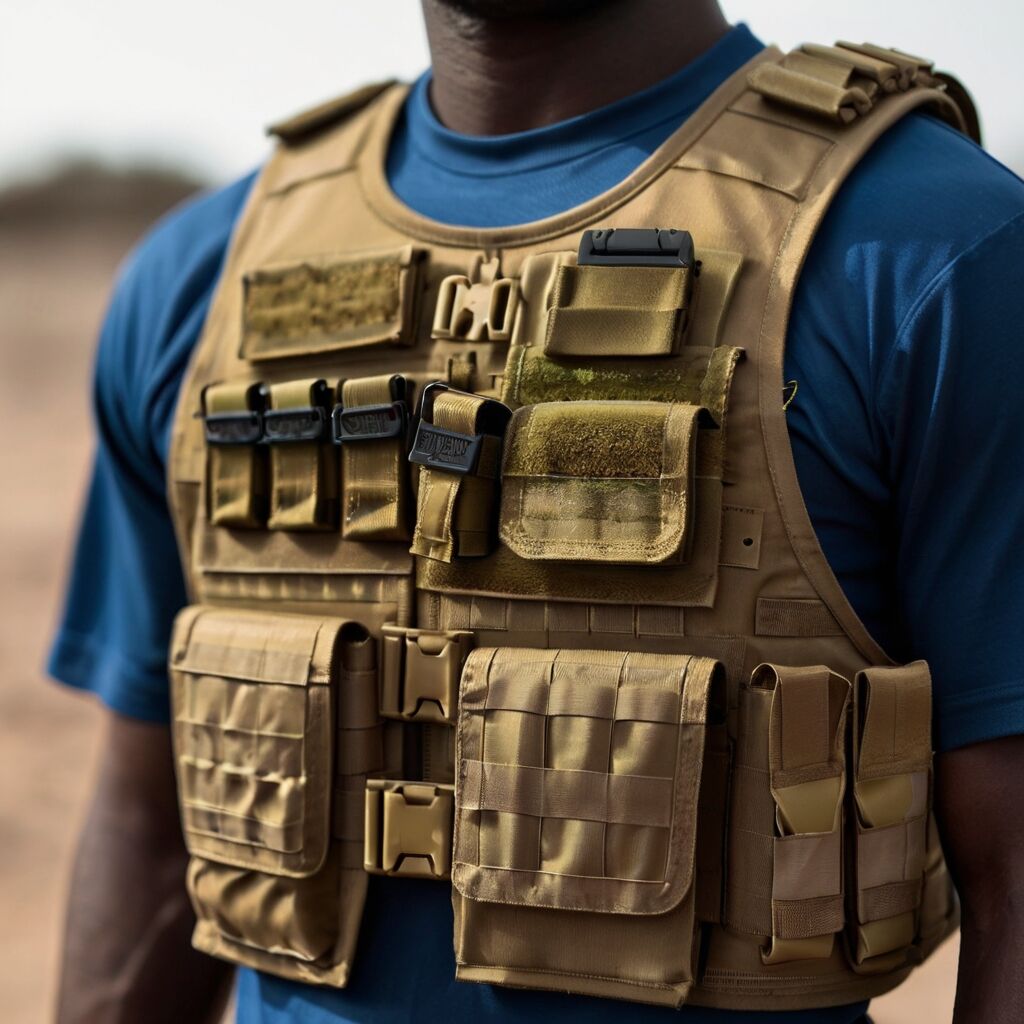
From my experience in assessing tactical plate materials, I know materials greatly influence the plates’ effectiveness in real-life scenarios. Different tactical plate materials, like Dyneema and Kevlar, considerably impact effectiveness factors in plates, especially in terms of stopping power versus speed of movement. Ceramic composite, offering a delicate weight vs protection balance, stands out as a Great choice, balancing lightweight features with Excellent performance. In real scenario plate effectiveness, users often rely on field tests and endurance trials to gauge performance, observing metrics like resistance to bullets and shrapnel. Material advancements expected over the next decade point to nanotechnology and graphene enhancements, significantly influencing materials technology future in combat vests. Fast innovations will likely bring both tougher and lighter options, improving tactical plate user evaluations overall.
Why Should Users Care About Cyber-Kinetic Wearables in Vests?
Cyber-kinetic wearable benefits include enhanced situational awareness and communication tools, which are transforming how users interact with their vests in combat environments. The change in tactical vest use is notable, with cyber-enhancements shifting combat strategy through features like real-time health monitoring and navigation aids. As of 2022, around 30% of vest users incorporate cyber-kinetic wearables, a figure projected to grow. Integration challenges faced involve ensuring compatibility with existing vest frameworks, as many traditional vs cyber-kinetic designs lack Easy adaptation paths. Manufacturers like Crye Precision and 5.11 Tactical continually explore solutions, hoping to bridge these gaps smoothly and comfortably for the end-user.
This article is focused on giving detailed explanations and practical advice to those interested in buying tactical vests, incorporating elements of cyber-kinetic technology and advancements in materials.
Tactical Vest Pro is reader-supported: some links on this page are affiliate links, and as an Amazon Associate Tactical Vest Pro earns from qualifying purchases at no extra cost to you. Learn more.