
For most tactical vest applications, a material denier between 500D and 1000D provides the necessary balance of durability and weight. You should select your specific denier based on whether your priority is high-mobility movement or heavy-load durability.
Recommended Material Denier for Tactical Vest Use Cases
| Use Case | Recommended Material Denier | Why this number |
|---|---|---|
| High-Mobility / Airsoft | 300D – 500D | Lower denier reduces weight and bulk for high-frequency movement. |
| General Duty / Patrol | 500D – 700D | Provides a standard balance of abrasion resistance and manageable weight. |
| Heavy Load / Patrol | 700D – 1000D | Higher denier handles the friction of heavy gear and high-wear environments. |
| Extreme Environment / Maritime | 1000D+ | Maximum resistance to extreme abrasion and heavy weight distribution. |
Products in this category with a full review here
Prices across these 3 run from $119.99 to $155.99; each one has a full review here.
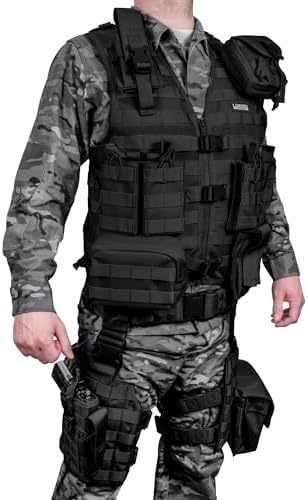

Loaded Gear Tactical Vest with Leg Platforms
If you need extra storage for your lower body, view our top-rated gear with leg platforms.
$125.52 price checked August 2026

YAKEDA Tactical Outdoor Quick Release Modular Vest
$119.99 price checked August 2026
Read our full YAKEDA Tactical Vest review
For those hunting in the field, compare the best turkey hunting vests with seats.
What Happens if You Under-Provision or Over-Buy Material Denier?
Risks of Under-Provisioning Denier
Under-provisioning occurs when the denier is too low for the intended load, leading to premature material failure. If you choose a vest with a denier below 500D for heavy-duty use, the nylon fibers can fray or tear at high-stress friction points like the shoulder straps or MOLLE webbing attachments.
This failure often manifests as “pilling” or thinning of the fabric where gear rubs against the vest. Once the fibers begin to break, the structural integrity of the load-bearing system is compromised, potentially causing gear to shift or the stitching to pull away from the weakened base material.
The Cost of Over-Buying Denier
Over-buying occurs when you select a material like 1000D for a use case that only requires 500D, such as high-mobility training. The primary cost of high-denier material is weight, which increases the fatigue on your shoulders and neck over long periods of wear.
Heavier fabric also creates a stiffer, less flexible garment. A vest made of very high-denier material can feel “stiff” and may restrict your ability to reach for equipment or move your arms naturally. You pay for durability that you may never actually utilize in a low-intensity environment.
The Mistake Most Buyers Make with Material Denier
Optimizing for Weight Distribution instead of Denier
The mistake most buyers make is assuming that a higher denier number automatically solves all durability issues. While denier measures the thickness of the individual fibers, it does not account for the construction method or the weight distribution of the vest’s geometry.
You should optimize for weight distribution and ergonomic design instead of just seeking the highest denier number available. A well-designed 500D vest with proper shoulder padding and a contoured back will often perform better for a human user than a 1000D vest with poor weight distribution that causes the vest to “sag” or pinch the armpits.
Focus on how the load is distributed across the torso. If the weight is not balanced, even the strongest material in the world will cause discomfort and fatigue.
Finding the right fit is crucial, so learn how to measure your waist circumference.
How Material Denier Interacts with Other Deciding Specs
Stitching Strength vs. Fabric Denier
Stitching strength is a critical interaction because the thread used must match the capabilities of the denier. If you use a high-denier 1000D fabric but the manufacturer uses low-tensile thread, the fabric will remain intact while the seams fail under load.
The material denier sets the ceiling for how much weight the fabric can hold, but the stitch density and thread type determine how that weight is actually distributed across the garment. Always ensure the construction matches the material’s durability rating.
MOLLE Webbing and Material Denier
MOLLE webbing is often a different denier than the main body of the vest. A common point of failure is when the main body is a high-denier material but the MOLLE webbing is a lower-denier nylon.
If the webbing is weaker than the body material, the points where you attach pouches will be the first to fail. Look for a consistent denier across both the main panels and the load-bearing webbing to ensure uniform strength across the entire system.
Weight Limits and Material Density
Material denier interacts directly with the total weight of the vest. As denier increases, the base weight of the empty vest increases significantly. This creates a point of diminishing returns where the added weight of the heavier material might outweigh the benefits of the extra durability for the average user.
For most users, the “sweet spot” is a material that provides enough durability to last for years of use without adding unnecessary pounds to the kit. If you are not carrying extreme loads, a mid-range denier provides the best utility for the time spent wearing the gear.