
Most duty users require a Retention Level of 2 or 3 depending on the specific threat environment and agency requirements. You should choose a level that balances the speed of a draw with the physical security needed to prevent the firearm from being removed during a struggle.
Recommended Retention Levels for Duty Holsters by Use Case
| Use Case | Recommended Retention Level | Why this number |
|---|---|---|
| Standard Patrol | Level 2 | Provides a balance of security and speed for routine duties where the risk of a physical struggle is lower. |
| High-Risk Detail | Level 3 | Offers the highest security against forced removal during close-quarters physical confrontations. |
| Concealed Carry Duty | Level 2 or 3 | Higher retention is often necessary to prevent the firearm from shifting or being grabbed in a crowded environment. |
| Training/Range Use | Level 1 | Prioritizes speed and ease of access over security, as the risk of a physical struggle is non-existent. |
| Security Detail | Level 3 | Ensures the firearm remains secured even if the wearer is pinned or physically engaged by a suspect. |
Duty Holsters covered by our own reviews
3 reviewed options, $106.40 to $169.84, with the full write-up behind each name.

Bianchi AccuMold Elite 7920 Defender II Glock 17
$106.40 price checked August 2026
Read our full Bianchi AccuMold Elite 7920 Defender II Glock 17 review
If you are mounting optics, view our top-rated duty holster for red dot sight options.

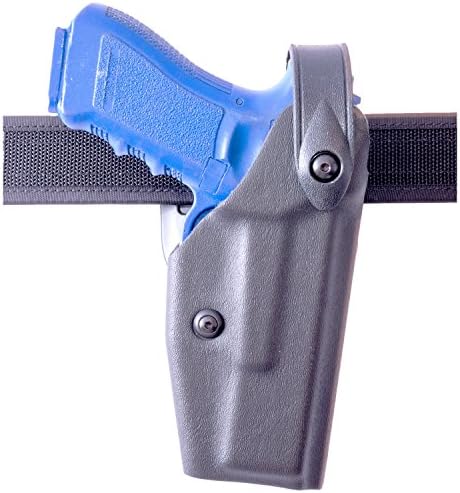
Safariland 6285 SLS Level 2 Retention Holster
You can also find the best duty holster for Sig Sauer P226 in our dedicated comparison.
$144.35 price checked August 2026
Risks of Under-Provisioning or Over-Buying Retention Level
Risks of Under-Provisioning
Under-provisioning occurs when you select a Retention Level 1 or a low-security setup for a duty role that involves a high risk of physical engagement. If a holster lacks sufficient mechanical resistance, a suspect can potentially remove the firearm during a struggle. This creates a significant safety liability for the user and the public, as the primary tool for defense becomes a liability. You need a holster that provides a definitive mechanical stop or a high-friction barrier to prevent the firearm from sliding out of the housing during a “walk” or a grab.
The Real Cost of Over-Buying
Over-buying happens when you select a Level 3 retention system for a role that does not require it, such as a low-risk administrative duty. The cost of over-buying is found in the increased time required to clear the retention mechanism. Every additional movement—whether it is a lever, a button, or a complex pull—adds milliseconds to your draw time. While a Level 3 system is safer in a fight, it can feel cumbersome and slow for everyday use. If you do not need the extreme security of a high-retention system, you are paying for a level of complexity that may hinder your daily efficiency.
Selecting the right placement is vital, so learn how to choose your duty holster carry position.
The Retention Level Mistake Most Buyers Make
Focusing on Retention Instead of Fit
Many buyers mistakenly believe that a higher Retention Level automatically results in a safer holster. In reality, the most common mistake is prioritizing a high retention number over the physical geometry of the holster’s fit. If a holster has a poor fit, the firearm can “cant” or “walk” during a draw. A holster that shifts even slightly can cause a negligent discharge or a missed target, regardless of how many locks it has. You should optimize for a holster that seats the firearm perfectly in the desired orientation first.
Optimizing for Geometry
Instead of just looking at the Level number, you should look at how the internal geometry of the holster aligns with your specific firearm’s grip angle. A well-fitted holster ensures that the firearm remains stable during the initial movement of the draw. Once the fit is correct, the Retention Level should be chosen based on your specific job description. A perfect fit combined with a Level 2 or 3 retention system provides the safest and most reliable configuration for duty use.
How Retention Level Interacts with Other Duty Holster Specs
Retention Level vs. Draw Speed
Retention Level directly impacts the speed of the draw. A Level 3 system typically requires a conscious, deliberate action to release the firearm. If your duty requirements demand a near-instantaneous draw, a high retention level may be a bottleneck. You must weigh the necessity of high-security retention against the speed required for your specific environment. In high-threat areas, the extra second required to clear a Level 3 lock is often a necessary trade-off for the security it provides.
Retention Level vs. Material Durability
The mechanical components required for high Retention Levels—such as springs, levers, and locking pins—are potential points of failure. A holster with complex retention requires high-quality materials to ensure these parts do not fail over time or under stress. If you choose a high Retention Level, ensure the holster uses high-quality polymers or metals for the locking mechanisms. A retention system is only as reliable as the material it is built into; if the retention lever breaks due to poor material choice, the Level rating becomes irrelevant.
Retention Level vs. Weight and Bulk
Higher Retention Levels often lead to a heavier and bulkier holster because of the additional hardware required to secure the firearm. This added weight can affect the comfort of a duty belt over a long shift. If you are already carrying a heavy kit, the extra weight of a Level 3 system might be noticeable. You should consider the weight of the retention hardware when deciding if the extra security is worth the added burden on your gear.
The rest of our Duty Holster guides
- Duty Holsters for Sig Sauer P226 Compared
- Choosing the Best Duty Holster for H&K USP 45
- The Duty Holsters That Work Best for Springfield XD
- Which Duty Holster Is Best for Light Bearing Pistols?
- Choosing the Best Duty Holster for Glock 17
- The Retention Duty Holsters That Work Best for Level 3 Retention