
Carry position refers to the specific physical placement of a duty holster on the body, typically categorized by its orientation on the hip or torso. Your choice depends on your physical proportions, the specific duty gear you wear, and your personal requirements for speed and accessibility.
Which Carry Position Suits You?
| If this is you | The Carry Position that suits you | Why |
|---|---|---|
| You work in a role requiring high-frequency access and constant readiness. | Strong Side (Front) | This position places the holster on your dominant side, minimizing the distance the hand must travel to reach the grip. |
| You wear a heavy duty belt with multiple pouches and heavy equipment. | Strong Side (Rear) | Rear carry on the strong side can balance the weight of heavy gear on the front of the belt while maintaining a familiar grip orientation. |
| You have a shorter torso or a wider waist and find front-facing holsters uncomfortable. | Weak Side (Front) | Moving the holster to the non-dominant side can provide more clearance for the hips and prevent the holster from “riding up” during movement. |
| You prioritize concealment or need to avoid interference from a duty vest or plate carrier. | Strong Side (Rear) | Rear carry often allows for a more streamlined profile that sits closer to the body’s center of gravity. |
| You have a smaller frame and find standard strong-side positions restrictive. | Weak Side (Rear) | This position can provide a more natural “reach” for some body types while keeping the holster clear of the dominant arm’s movement. |
Duty Holsters covered by our own reviews
From $124.99 to $189.60: the 3 in this category we have reviewed in full.

Safariland Model 6360 ALS/SLS Mid-Ride Level-III Holster
$142.02 price checked August 2026
Read our full Safariland 6360 Holster review
If you own that specific frame, you should view our best duty holster for Springfield XD selection.
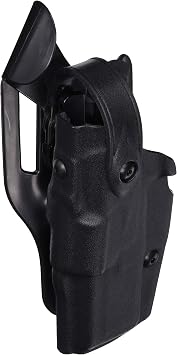

Safariland 6360RDS Level Three Retention Duty Holster
Security-conscious professionals can find the best level 3 retention duty holster for high-stakes environments.
$189.60 price checked August 2026
How Do You Measure Your Carry Position Before Ordering?
Establishing your correct carry position requires physical measurements rather than just choosing a preference. You must determine the distance between your belt line and your hip bone, as well as the clearance required for your specific duty gear.
Measuring the Belt-to-Hip Distance
Measure the distance from the center of your belt to the top of your iliac crest (hip bone). This measurement ensures the holster sits at a height where the draw stroke is natural. If the holster sits too high, it may interfere with your movement; if too low, it may “cant” or tilt outward during a draw.
Understanding the mechanical nuances is easy when you learn about every locking system for duty holsters available.
Checking for Gear Interference
Check the width of your duty belt and the thickness of any pouches you plan to wear. A common mistake is selecting a carry position that overlaps with a radio pouch or a medical kit. Measure the width of your belt’s “real estate” to ensure the holster has a dedicated space where it won’t shift or press against other equipment.
Locating Position Specs on Technical Data
While carry position is a physical fit, some technical data provides the “cant” angle or “sweep” of the holster. Look for these values in the manufacturer’s technical specifications. A “cant” refers to the inward or outward tilt of the holster. You should check that the specified cant angle aligns with how you naturally hold your firearm when it is holstered.
What Goes Wrong with a Carry Position That Is Too Far Forward or Back?
A carry position that is poorly suited to your body geometry creates mechanical failures during use. If the position is incorrect, the holster may not stay seated, leading to a “walk” or a “cant” that compromises safety.
Risks of a Position Too Far Forward
If the holster is positioned too far forward on the hip, it can interfere with the natural swing of your leg during running or climbing. This often results in the holster “riding up” toward the waist, which can cause the holster to tilt inward (cant) or potentially cause the trigger to engage as the holster shifts against the body.
Risks of a Position Too Far Back
A position that is too far back on the hip can lead to a “lazy” draw where the hand must reach behind the body’s centerline. This increases the time it takes to establish a firm grip and can cause the holster to “walk” outward away from the body. This movement can lead to a “cant” that makes the firearm difficult to align with a target quickly.
Before purchasing, make sure to verify the compatibility for duty holsters with your specific firearm.
What Should You Do if You Fall Between Two Carry Positions?
If your measurements and requirements sit between two common positions, you should prioritize the position that offers the most consistent holster seat. A holster that stays perfectly still in a “middle” position is superior to one that shifts between two extremes.
Prioritizing Stability Over Preference
When you are between positions, choose the one that allows for the most “neutral” cant. A neutral cant means the holster sits as square to your body as possible while still allowing for a natural grip. If a position forces the holster to tilt more than 10 degrees to stay on the belt, it is likely too far forward or back for your frame.
Testing the Range of Motion
Before finalizing your choice, simulate the movement. Move your hips and torso through a full range of motion. If the holster feels like it is “fighting” your body’s movement, shift the position slightly toward the side that offers more clearance. It is better to have a slightly less-than-ideal position that remains stable than a “perfect” position that moves during activity.
Because duty holster requirements and local regulations can vary significantly depending on your jurisdiction, you should confirm the current rules for your specific location before ordering.