
Duty holster warranties typically span a range of 1 to 3 years, though many manufacturers offer a limited lifetime guarantee on specific structural components. The most common reason a claim in this category is refused is the presence of “user-induced wear,” which includes stretching of the material or deformation of the retention mechanism caused by improper fitment or excessive force during use.
What Does a Duty Holster Warranty Normally Cover?
A duty holster warranty normally covers manufacturing defects in the materials and the mechanical integrity of the locking systems. This means the warranty is designed to address issues that occur during the normal, intended operation of the holster rather than the inevitable degradation caused by daily carry.
Standard Covered Items
- Failure of the ALS (Automatic Locking System) to engage or disengage.
- Cracking or structural failure of the holster body and mounting hardware.
- Defects in the stitching or bonding of the holster material.
- Faulty hardware, such as broken clips or malfunctioning retention buttons.
Standard Excluded Items
- Wear and tear on the holster surface from friction against clothing or gear.
- Stretching of the holster body due to using a firearm larger than the specified model.
- Damage caused by chemical exposure, such as harsh cleaning agents or salt water.
- Modifications made by the user, including drilling, cutting, or aftermarket additions.
- Damage resulting from a “walk” or “cant” caused by an improper holster-to-firearm fit.
Reviewed examples from this category
3 reviewed options, $106.40 to $174.65, with the full write-up behind each name.

Safariland 6365 ALS/SLS Level 3 Retention Holster
$142.40 price checked August 2026
Read our full Safariland 6365 Holster review
If you are looking for a specific fit, see our list of duty holster options for light bearing pistols.
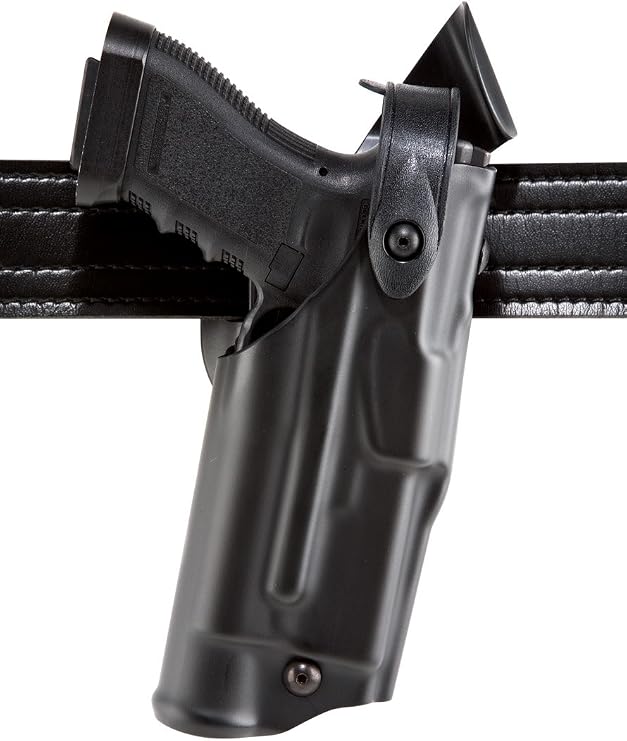

Bianchi AccuMold Elite 7920 Defender II Glock 17
$106.40 price checked August 2026
For owners of the Glock 17, we have compiled a guide on finding the best duty holster for Glock 17.
Read our full Bianchi AccuMold Elite 7920 Defender II Glock 17 review
How Does the Seller Affect Your Warranty?
Coverage for a duty holster differs significantly based on the source of the purchase, as the manufacturer’s ability to honor a claim often depends on a verified chain of custody.
Direct and Authorized Retailers
Purchasing directly from the maker or an authorized retailer generally provides the most straightforward path to a claim. These sources usually provide a direct link to the manufacturer’s warranty department and ensure that the product is authentic and eligible for standard coverage.
Marketplace and Third-Party Sellers
Buying from a marketplace seller introduces a layer of risk where the seller may not be authorized to provide warranty support. In these cases, the manufacturer may refuse a claim if they cannot verify the origin of the unit, potentially leaving you to rely solely on the marketplace’s own return policy.
Refurbished, Open-Box, and Grey Market
Refurbished, open-box, or grey-market sellers often sell products that are ineligible for manufacturer warranties. Because these items may have been previously owned, used in different regions, or imported without official authorization, the manufacturer typically excludes them from standard coverage entirely.
New users should first learn the fundamentals of how a duty holster works.
What Actions Void a Duty Holster Warranty?
Specific actions that void coverage in this category usually involve any modification that alters the geometry or the structural integrity of the holster.
Unauthorized Modifications
Modifying the holster, such as drilling new holes for a different belt clip or cutting the material to accommodate a larger grip, immediately voids the warranty. These changes can compromise the retention levels, such as Level 1, 2, or 3, and create safety liabilities.
Improper Fitment and Overloading
Attempting to force a firearm into a holster that is not sized for that specific model will void coverage. If the material is stretched beyond its engineered limits, the manufacturer will classify the failure as user error rather than a manufacturing defect.
Extreme Environmental Exposure
Using the holster in environments it was not rated for, such as prolonged submersion or exposure to industrial chemicals, voids the warranty. If the material degrades due to substances other than standard environmental wear, the claim will likely be denied.
What Should You Do Before Buying?
Taking specific steps before you purchase a duty holster ensures that you have the necessary documentation and information to successfully file a claim if a failure occurs.
- Request a written copy of the warranty terms to confirm the specific coverage period and geographic limitations.
- Verify that the seller is an authorized dealer to ensure the product is eligible for manufacturer support.
- Keep your original purchase receipt, as most manufacturers require a proof of purchase with a date and order number.
- Confirm the specific firearm model compatibility to ensure the holster is engineered for your exact equipment.
- Check the local regulations for your specific location regarding the purchase and carry of duty holsters before ordering.
Is an Extended Warranty Worth It?
An extended warranty is worth it for high-end duty holsters that utilize complex mechanical locking systems, such as those featuring SLS (Secure Locking System) components, where a mechanical failure could be costly to repair. It is generally not worth it for basic, friction-based holsters where the primary failure mode is material wear, which is rarely covered by any warranty regardless of its length.